
Canine Epilepsy
Introduction to Canine Epilepsy
Idiopathic (genetic) epilepsy in dogs is a condition where a dog has repeated seizures over their lifetime, but even after extensive testing, no cause is found. This testing may include blood work, MRI, and a spinal tap. Idiopathic epilepsy is sometimes described as “faulty wiring” in the brain that causes a pet to have seizures.
Epilepsy is the most common cause of seizures in dogs. Dogs with idiopathic epilepsy are typically one to five years old at the time of their first seizure and should be completely normal between seizures. Epilepsy can occur in younger or older dogs as well, but diagnostics are especially important in those patients to make sure another cause is not being missed.
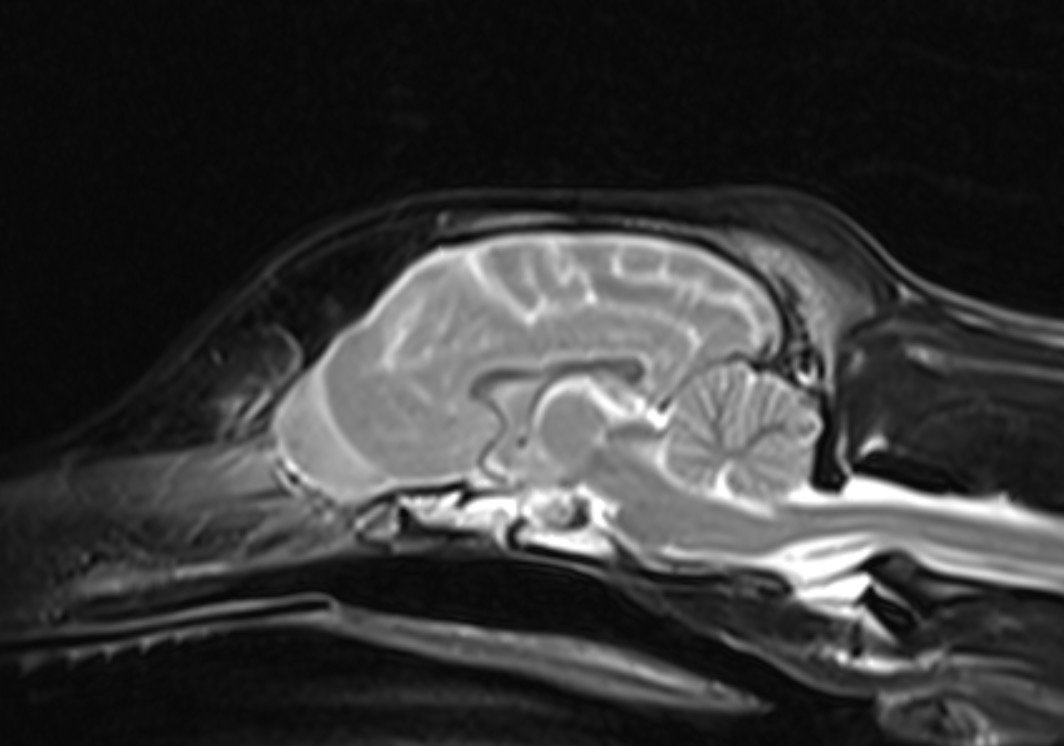
MRI of a healthy dog's brain.
Is my dog going to be OK?
Most dogs with epilepsy are well controlled with medication. “Well controlled” can look a little different for each dog, but Remedy generally considers a dog well controlled if they have fewer than one seizure every six weeks. About 75% of dogs with epilepsy will be well controlled on one or two seizure medications.
Finding the Right Medication Plan
There’s no single seizure medication that works perfectly for every dog. Sometimes it takes trying more than one medication to find the best fit. Success is measured by both the extent to which the medication controls seizures and the severity of side effects a dog experiences. The goal is optimal seizure control with minimal side effects. When perfect control without side effects is not realistic, treatment focuses on a careful balance of strong control and mild, manageable side effects.

Living With An Epileptic Dog
A diagnosis of canine epilepsy does not have to rule your life or your dog’s life. Dogs with seizures can still be left alone, and you can still go to work or run errands. You may occasionally miss a seizure, but most seizures are brief and resolve spontaneously. Often, there’s a clue afterward, such as something being knocked over or drool on the floor.
It helps to track any suspicious events in a seizure log or calendar and to notify your veterinarian of changes. In general, it’s more helpful for your veterinary team to understand the overall trend in seizure frequency and severity than to capture every single event.
Do Dogs Have Seizure Triggers?
In people, seizures can sometimes be triggered by specific stimuli, and some pet parents notice triggers in their dogs as well. A trigger can be anything from a particular smell to an event, such as an owner leaving town. If a trigger is identified, it should be avoided whenever possible.
Remedy also recognizes that until a dog’s seizures are well controlled, stressful or especially exciting situations can trigger seizures. Until seizure control improves, it can help to limit overly stimulating activities. For instance, if playing frisbee makes your dog extremely excited, switching to a calmer game, such as tug-of-war, may be a better choice until the seizure medication takes effect.
Will Epilepsy Shorten My Dog’s Lifespan?
On average, dogs with epilepsy do have a shorter lifespan than dogs without epilepsy. However, many dogs with epilepsy still live a normal lifespan.
Unfortunately, some pets don’t respond to one or two medications. This is called pharmacoresistant epilepsy, and these pets often have shorter lifespans because seizures can be difficult, or even impossible, to control.
In 2015, the International Veterinary Epilepsy Task Force published guidelines recommending earlier treatment of epilepsy in the hope of improving outcomes. At an appointment, Remedy will discuss the pros and cons of starting seizure medication.
Epilepsy can also create real financial and emotional strain for families. Open, honest communication with a veterinarian about concerns is important. Many loving pet parents focus intensely on a dog’s quality of life and may sacrifice their own well-being to keep up with care. That generosity matters, and it’s also important that you maintain a good quality of life, too. If managing a pet’s epilepsy is becoming overwhelming, please talk with Remedy so the team can help explore options and solutions.
Medication Timing & Everyday Safety
Seizure medication should be given on schedule. Some dogs require precise timing, whereas many have some flexibility. For example, for most patients, if you’re out to dinner and will be home afterward, it’s usually OK to be a couple of hours early or late with a dose.
The one activity Remedy recommends against for all dogs with seizures is swimming. Because seizures can be unpredictable, a seizure while swimming could result in drowning.
Does my Dog need an MRI?
Most dogs with epilepsy do not need an MRI. However, an MRI and other diagnostics are recommended if a dogfalls into one of the categories below:
Younger than six months or older than six years at the time of the first seizure
Neurologic abnormalities (such as incoordination) present between seizures
Severe seizure patterns, including:
A seizure lasting longer than five minutes (status epilepticus)
More than one seizure in 24 hours (cluster seizures)
Inadequate seizure control on a seizure medication at the highest tolerated dose
Diagnosing Epilepsy in Dogs
There’s no single test for epilepsy. That means diagnosing canine epilepsy requires testing for other possible causes of seizures and finding no underlying disease. This is called a diagnosis of exclusion.
In dogs that fit the “typical” profile for idiopathic epilepsy, advanced diagnostics like an MRI are often deferred. Because this pattern is common, a veterinarian may make a working assumption that the dog has epilepsy, even though it is not proven. This is called a presumptive diagnosis. If a dog develops new symptoms or seizures that are difficult to control with medication, completing diagnostics becomes more important.
About 10% of dogs initially presumed to have epilepsy based on symptoms are later found to have a different cause for their seizures.
Does Diet Matter for Seizures?
This area of science is still evolving. There are sporadic reports of food allergies triggering seizures in people, but this hasn’t been reported in dogs.
Some studies in humans suggest benefits from certain diets, such as the ketogenic diet. There’s a prescription diet from Purina called NeuroCare that’s based on this ketogenic diet theory, and it’s shown some benefit in helping dogs with epilepsy. This diet is available only through veterinarians.
If a dog doesn’t have food sensitivities, it may be worth discussing a trial of this diet with a veterinarian. In the study, dogs showed benefits relatively quickly, so you may be able to tell within a short time whether it’s helping.
If you try this diet, it’s important that the dog not receive other foods and that treats are kept to a minimum. Otherwise, the diet may not work as intended.

Managing Epilepsy Over time
Managing a pet’s epilepsy is a partnership with a veterinary team. Treatment plans can vary somewhat from doctor to doctor, even when using the same medications, because the details of how a plan is designed can differ.
For that reason, it’s advisable to select one primary veterinarian to oversee seizure control and coordinate the long-term epilepsy plan. When multiple veterinarians are adjusting medications for the same patient, it can become difficult to stay organized and track what is helping.
If a pet is having a medical emergency, follow the emergency veterinarian’s instructions. Once the urgent situation has passed, schedule a follow-up with the veterinarian managing seizure care so the plan can be adjusted as needed.
Before making any changes to seizure medications, please contact Remedy. These medications are safe when used correctly, but even small at-home dose changes can lead to serious problems. Remedy’s team is here to help you adjust the plan safely.

Regular Check-Ups & Lab Work
A veterinarian is an important partner in controlling seizures in pets. That includes regular checkups and blood tests to monitor medication levels and assess for side effects. Typically, blood work is recommended two or three times a year, depending on your pet’s seizure medications.
Keys to a Successful Appointment
Bring your pet’s seizure log. This helps track seizure frequency and severity over time.
Bring all medications. Having the bottles on hand helps confirm names and doses.
Ask about fasting and medication timing when you schedule. Some tests require fasting for up to eight hours, while others may require medication to be given at specific times before the appointment.
Ask how long the visit may take. Some tests take several hours to perform.
Learn More