
Intervertebral Disc Disease (IVDD) in dogs
Medically reviewed by Remedy's board-certified veterinary neurologists, Dr. Carrie Jurney, DVM, DACVIM (Neurology) and Dr. Mona Qahwash, DVM, DACVIM (Neurology).
What Is IVDD In Dogs?
Intervertebral disc disease (IVDD) in dogs is a common cause of spinal cord problems and neurologic symptoms. IVDD occurs in different forms, most often described as Type 1, Type 2, and sometimes Type 3 disc disease. Type 3 discs are similar to a condition called fibrocartilaginous embolism (FCE). Unlike Type 1 and Type 2 IVDD, FCE isn't caused by disc material pressing on the spinal cord — it works more like a stroke, where a small piece of disc material blocks blood flow to the spinal cord instead of compressing it.
Type 1 IVDD, often called a 'ruptured,' 'herniated,' or 'prolapsed' disc, and Type 2 IVDD, sometimes called a 'slipped' or 'bulging' disc, can occur in any breed. In general, Type 1 IVDD is more common in small-breed dogs, while Type 2 IVDD tends to occur more often in larger breeds. These patterns can be helpful, but individual dogs do not always follow them, and some dogs can experience more than one type of disc problem.
Does IVDD Happen In Cats?
Yes, though it's far less common than in dogs. Cats' spines are naturally more flexible, so when IVDD does occur, it tends to progress more slowly and cause milder signs — subtle stiffness, reluctance to jump, or a change in litter box habits are usually the first things pet parents notice. If you're seeing these changes in your cat, Remedy's neurology team can help determine whether IVDD or another condition is responsible.

Type 1 IVDD in Dogs
Type 1 IVDD In Dogs: "Type 1 intervertebral disc disease (Type 1 IVDD), sometimes called a ruptured or prolapsed disc, is influenced by both genetics and circumstance. Selective breeding for certain physical traits, such as the short legs seen in Dachshunds, has increased the risk of disc disease in some dogs. A gene often involved is the CDDY gene, and testing is available to determine whether a dog carries it.
What the CDDY Gene Does to a Spinal Disc
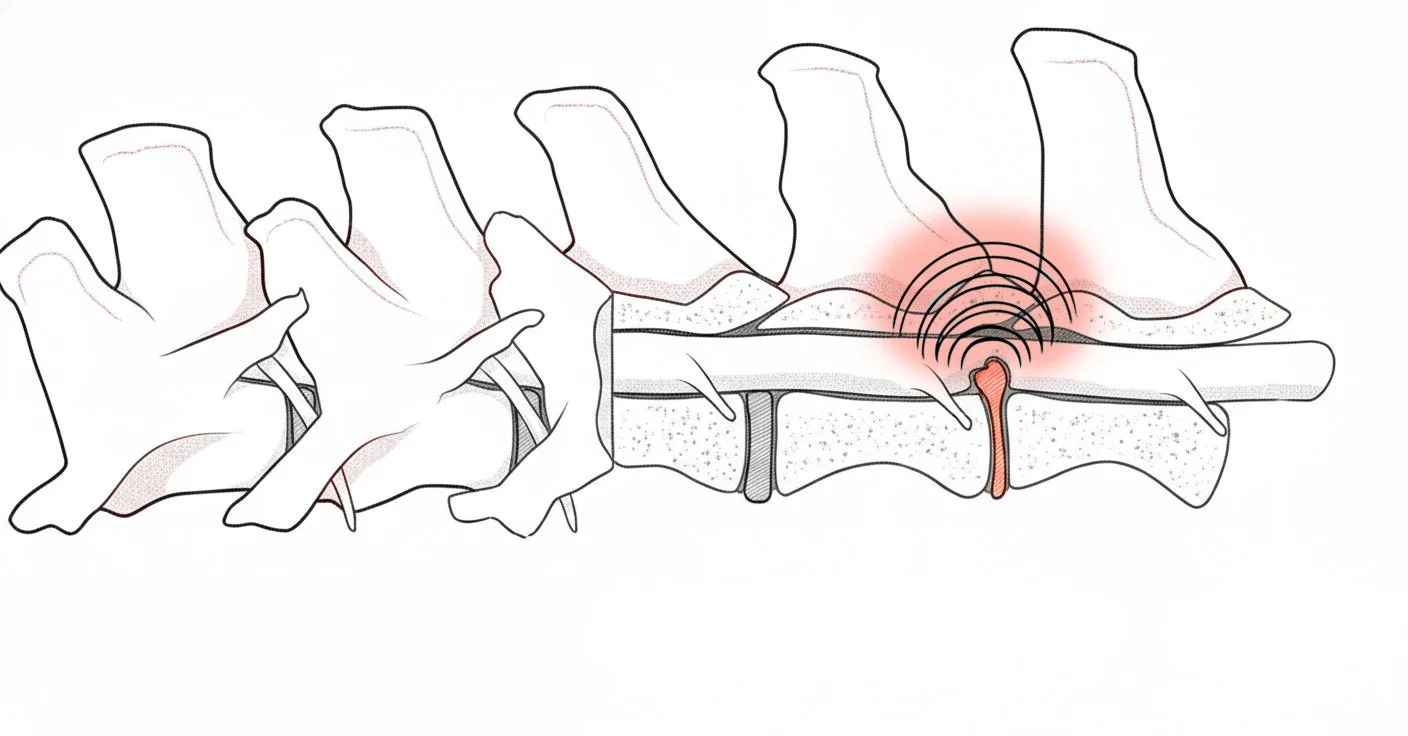
A healthy spinal disc can be compared to a jelly donut: a tough outer layer called the annulus surrounds a soft, gel-like center called the nucleus pulposus, which acts as a shock absorber. In dogs with the CDDY gene, the inner gel hardens and loses some of its shock-absorbing function.
When a dog does an everyday activity, such as jumping off a couch, the outer annulus can tear. The hardened inner material can then extrude, creating pressure on the spinal cord. This pressure can cause pain, incoordination, and weakness.
Type 2 IVDD in Dogs
Type 2 IVDD In Dogs: "Type 2 intervertebral disc disease (Type 2 IVDD), sometimes called a slipped or bulging disc, is most often related to the gradual wear and tear of the spinal discs over time. With normal movement and activity, small tears can develop in the disc’s tough outer rim, called the annulus. These tears may heal, but the annulus can enlarge and eventually place pressure on the spinal cord and nerves.
How Type 2 IVDD Can Show Up
Type 2 IVDD often starts with subtle changes that build over time. Pet parents may notice:
Reluctance to climb stairs
Hesitation to jump into a car
Discomfort on hard surfaces like hardwood or tile
Nails scuffing more during walks
While early signs can be mild, some dogs worsen suddenly after a longer period of subtle symptoms.

Diagnosing IVDD in Dogs
Yes — X-rays can often suggest IVDD, but they can't provide a definitive diagnosis on their own. To diagnose intervertebral disc disease (IVDD) in dogs, a veterinarian needs spinal imaging. Many IVDD evaluations begin with spinal X-rays, a more cost-effective way to look at the bones of the spine. X-rays help rule out serious conditions such as bone infections or tumors. X-rays may also suggest whether a dog could have Type 1 or Type 2 IVDD, but X-rays alone don’t provide a definitive diagnosis of IVDD.
MRI for IVDD in Dogs
When a definitive diagnosis is needed, a veterinarian often recommends an MRI (magnetic resonance imaging). An MRI can definitively diagnose IVDD in all affected dogs and about 90% of other spinal diseases. MRI is a more extensive test, but it plays an important role in accurately diagnosing IVDD and other spinal cord problems.
Treatment & Prognosis for IVDD in the Middle & Lower Back
Intervertebral disc disease (IVDD) in the middle and lower back (rather than the neck) often requires a different treatment approach. This form of IVDD is more common, and care generally follows one of two paths: conservative management or surgery.
Conservative Management for Mid to Lower Back IVDD
Veterinarians often recommend conservative management for dogs that can still walk, even if they’re weak or uncoordinated. With strict rest, time, and medication as directed, dogs that can walk have about a 70% chance of pain improvement and regaining walking ability.
Recurrence remains a long-term consideration. With conservative management, there can be up to a 50% chance of a similar IVDD episode in the future.
Learn more aboutconservative care for IVDD and surgery for IVDD.
IVDD Severity Grades in Dogs
Veterinarians use a five-point IVDD grading scale to describe the severity of intervertebral disc disease (IVDD) in dogs:
Grade 1 - Pain only (walking normally): Pain is present, but coordination and strength remain normal.
Grade 2 - Walking but uncoordinated (may be weak): The dog can still walk unassisted, but shows incoordination and may have decreased strength.
Grade 3 - Cannot walk without assistance: The dog can move its legs but cannot walk without help.
Grade 4 - Paralyzed but feels pain: The dog cannot move its legs but can still feel pain in them.
Grade 5 - Paralyzed without pain sensation: The dog cannot move its legs and cannot feel pain in them.
Because the differences between grades can be subtle, Remedy recommends an in-person evaluation rather than trying to grade symptoms at home. If you’re unsure what you’re seeing, Remedy’s team is here to help you decide on the next step.

Wondering if surgery is the right next step?
Surgery is often the best option for dogs with severe symptoms, dogs who aren't improving with rest, or dogs with repeat episodes. Remedy's board-certified neurologists perform IVDD surgery in-house, with transparent, all-inclusive pricing — no surprise fees. See what to expect with IVDD surgery → · Chat with us now, or call (415) 967-3303.
Treatment & Prognosis for Neck IVDD in Dogs
Neck intervertebral disc disease (IVDD), sometimes called cervical IVDD, can be more challenging to manage than IVDD in the middle or lower back. Conservative management is often harder with neck injuries because even with crate confinement, dogs can still move their heads significantly. About 50% of dogs, even with mild neck IVDD, do not respond well to conservative management.
Neck IVDD can also be more dangerous because the neck contains critical nerves, including nerves that control breathing. In severe cases, nerve impairment can cause respiratory difficulty, and dogs with substantial symptoms may be at risk of stopping breathing.
Treatment & Prognosis for dogs with severe IVDD
Is IVDD fatal? On its own, rarely — but in severe or advanced cases, it can lead to permanent paralysis or, in rare instances, a life-threatening complication called myelomalacia (see below). In severe intervertebral disc disease (IVDD), spinal cord injury can be extensive enough that a dog loses sensation in the feet, often called loss of deep pain. At this stage, prognosis becomes more uncertain. When possible, the ideal approach is to pursue surgery before a dog loses the ability to feel its feet. However, this isn't always possible.
Surgery When Deep Pain Is Lost
For dogs that have lost foot sensation, the chance of recovery with surgery is about 50%–70%. An MRI can show spinal cord damage, which may affect these odds. Without surgery, the chance of recovery drops to about 10–20%.
This can be a difficult decision for families, weighing the risks of major surgery against an uncertain outcome. It's also important to consider the possibility that surgery may not restore walking. Dogs that do not regain mobility can still have happy lives with a wheelchair, but caring for a disabled pet is a significant commitment and may not be feasible for every family.
Risk Of Progressive Myelomalacia
Another concern in severe cases is progressive myelomalacia, which affects about 10% of dogs with advanced IVDD. This condition involves progressive deterioration of the spinal cord. As it spreads toward the neck, it can lead to pain and eventually respiratory failure. In these cases, euthanasia is often the only humane option because the condition is painful and irreversible, even in dogs that have undergone surgery.

How quickly do we need to go to surgery?
The timing of surgery for intervertebral disc disease (IVDD) in dogs has been debated among veterinary neurologists and surgeons. While some specialists previously recommended immediate, overnight surgery, the current consensus, supported by extensive research, is to perform IVDD surgery as soon as practically possible, ideally within a few days.
Delaying surgery for weeks or months may reduce how well treatment relieves a dog’s symptoms. Neurologic injury depends on both the severity of the spinal cord injury and the length of time it continues. Even a mild injury left untreated for too long can cause lasting spinal damage. Injured nerve cells can often recover, but once a nerve cell dies, it cannot regenerate. The canine spine can adapt and reorganize, but that ability has limits. For many dogs, timely surgery helps maximize recovery and reduce long-term effects.
Because timing can affect recovery, don't wait to find out if your dog needs surgery. Learn what IVDD surgery involves → — or reach us right now: chat with us using the widget on this page, or call (415) 967-3303.
When is IVDD an emergency?
It's crucial to seek emergency veterinary care if your pet exhibits any of the following symptoms:
A sudden loss of the ability to walk
Failure to urinate for more than 24 hours
Experiencing pain that’s not alleviated by prescribed medications
If your dog is showing any of these signs, don't wait! call us at (415) 967-3303 right away. If surgery ends up being the right path, you can see what to expect with IVDD surgery → so you know what's ahead.
Frequently Asked Questions
-
On its own, rarely — but in severe or advanced cases, IVDD can lead to permanent paralysis or, in rare instances, a life-threatening complication called myelomalacia.
-
X-rays can often suggest IVDD, but they can't provide a definitive diagnosis on their own. An MRI is needed to definitively diagnose IVDD in dogs.
-
Veterinarians grade IVDD on a five-point scale: Grade 1 (pain only, walking normally), Grade 2 (walking but uncoordinated), Grade 3 (cannot walk without assistance), Grade 4 (paralyzed but still feels pain), and Grade 5 (paralyzed with no pain sensation).
-
IVDD is caused by disc material pressing on the spinal cord. FCE (fibrocartilaginous embolism) works differently — more like a stroke, where a small piece of disc material blocks blood flow to the spinal cord instead of compressing it.
-
Yes, though it's far less common than in dogs. When IVDD does occur in cats, it tends to progress more slowly and cause milder signs, such as subtle stiffness or reluctance to jump.