Feeding a Dog with Megaesophagus
Reviewed by Remedy Veterinary Specialists Neurology Team Dr. Jurney, DVM, DACVIM (Neurology) Dr. Qahwash, DVM, DACVIM (Neurology)
Swallowing trouble & megaesophagus in dogs
Dogs can have difficulty swallowing (dysphagia) for a variety of reasons. Some dogs have trouble moving their tongues or mouths. Others have conditions such as megaesophagus, which prevents food from moving from the mouth to the stomach effectively.
When a dog cannot swallow properly, they may accidentally breathe food or water into their lungs. This may lead to aspiration pneumonia, which is very serious and, unfortunately, sometimes fatal.
This care handout covers practical feeding tips for dogs with difficulty swallowing, including safer food textures, upright (elevated) feeding, hydration options, and treat ideas.
Megaesophagus can occur on its own or secondary to an underlying neurologic or neuromuscular condition, such as myasthenia gravis. If your dog hasn't been fully diagnosed yet, Remedy's neurology team can help identify the underlying cause.
Questions? We're Here to Help
Megaesophagus and swallowing conditions can be a lot to manage day to day. Whether you're looking for a diagnosis or just trying to make feeding easier, our team is here to help.
Chat with us using the assistant below, call (415) 967-3303, or learn more about Remedy's neurology services.

Recommended food textures for dogs with difficulty swallowing
When dogs chew, their teeth and tongues shape food into a compact ball called a bolus, which is easier to swallow. Dogs who have trouble chewing and swallowing may struggle to form a bolus. When swallowing is difficult, the goal is to make this process as easy as possible.
Skip Dry Kibble & Choose a Safer Texture
Dry kibble isn’t recommended for dogs with swallowing difficulty because it requires a lot of chewing and coordination to form a bolus. It may also get stuck in the esophagus.
Instead, Remedy recommends feeding meatballs about 1 inch in diameter. Many dogs do best when they eat slowly, so feeding meatballs one at a time often helps.
You can make meatballs by:
Soaking and mashing dry kibble, or
Using canned dog food
If using canned food, look for a firm pâté, not a gravy, stew, or chunks variety. Remedy recommends cooked foods labeled as meeting Association of American Feed Control Officials (AAFCO) standards.
What About Food Slurries?
Some pet parents blend canned dog food with water until it reaches a milkshake-like consistency, called a slurry. While slurries can be easier to get down a dysfunctional esophagus, they may be dangerous for pets who have difficulty moving their mouths, tongues, and the back of their throat. Ask your pet’s veterinary team if slurries are appropriate for your dog.
How much to feed
Because different dog foods have different calorie counts, feeding amounts vary. Your pet’s veterinary team can help determine how much food your dog needs based on their size and individual needs.
Home-cooked Diets
If you’d like to use home-cooked foods, please let the Remedy team know, and we’ll be happy to refer you to a nutritionist. Dogs with swallowing conditions can be challenging to nourish, and the goal is to make sure what you feed is the best possible option for your dog.
Elevated Feeding for Dogs With Megaesophagus
Dogs with esophageal dysfunction often need gravity’s help to move food to the stomach. This means your dog should sit upright for 15–30 minutes after feeding. Below are options to help achieve that, such as a Bailey Chair.
Bailey Chairs
One of the easiest ways to support upright feeding is with a special feeding high chair called a Bailey Chair. Remedy recommends purchasing a first chair from the provided website, as they have more than a decade of experience perfecting it. If you’re particularly handy, look for online instructions for building a Bailey Chair at home. For small dogs, holding them upright after meals is often the simplest option.
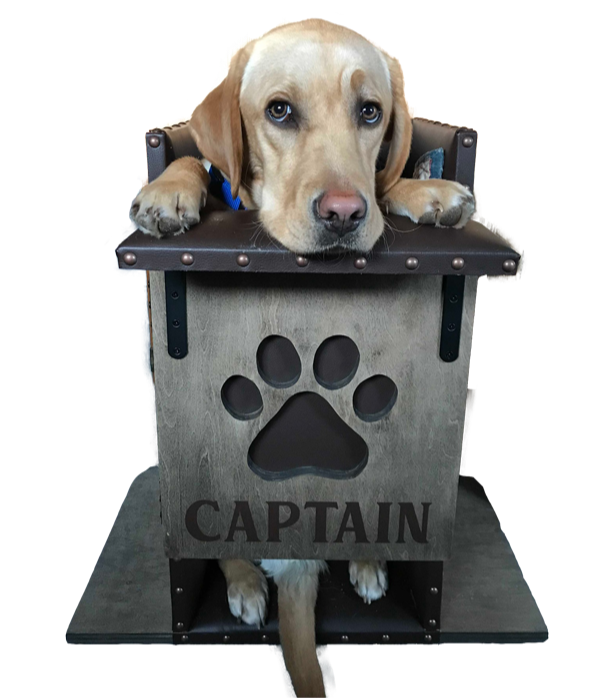
Bailey Chair
Hydration for Dogs with difficulty swallowing
Some dogs have difficulty drinking water safely. Syringing water isn’t recommended because it’s more likely to go down the wrong way and cause aspiration pneumonia.
Instead, Remedy recommends using gelatin to help supply water needs. If your dog won’t tolerate gelatin cubes, Remedy also recommends using a product called Thick-It to thicken water.
Gelatin Hydration Recipe
Ingredients
4 gelatin packets
1 cup cold water
1 cup heated low-sodium broth
2 cups boiling water
Directions
Add all 4 gelatin packets to 1 cup of cold water in a 9-by-13-inch pan and let sit for 1 minute.
Stir in the heated broth and water slowly.
Cover and refrigerate for 3 hours.
Cut the gelatin into 1-inch cubes.

Treat Options for Dogs with Difficulty swallowing
Most treats are not a good fit for dogs with swallowing difficulty unless the dog can sit upright for 30 minutes afterward, which isn’t usually practical. Below are a few alternatives that often feel more manageable for many families.
Easier treat alternatives
Treats that dissolve quickly in the mouth, such as Gerber Puffs or Bronson’s Mega Puffs.
Lick-style treats like Lickety Stiks, which provide a taste of flavor with no real substance to swallow.
Feeding Tubes
Even with great effort, not all dogs with difficulty swallowing tolerate feeding by mouth. For these dogs, Remedy recommends placing a stomach tube called a PEG tube. This allows food and water to go directly to the stomach without the need to swallow.

When to Contact Your Veterinarian
If your dog is regurgitating food or liquid, or if you notice weight loss, contact your veterinarian right away. These are signs the current plan may need adjustment, and your dog’s veterinary team should guide the next steps.
Questions? We're Here to Help
Megaesophagus and swallowing conditions can be a lot to manage day to day. Whether you're looking for a diagnosis or just trying to make feeding easier, our team is here to help.
Chat with us using the assistant below, call (415) 967-3303, or learn more about Remedy's neurology services.
Feeding Dogs with Megaesophagus FAQs
-
Dogs with megaesophagus or difficulty swallowing should sit upright for 15–30 minutes after eating.
-
Dry kibble is not recommended. Remedy recommends meatballs about 1 inch in diameter, often fed one at a time.
-
Not always. Slurries may be easier to get down a dysfunctional esophagus, but they can be dangerous for dogs who have difficulty moving the mouth, tongue, and the back of the throat. Ask your pet’s veterinary team whether slurries are the best option for your dog.
-
Syringing water isn’t recommended because it’s more likely to go down the wrong way and lead to aspiration pneumonia. Remedy recommends gelatin cubes or Thick-It to thicken water if gelatin doesn’t work for your dog.
-
If your dog is regurgitating food or liquid, or seems to be losing weight, contact your veterinarian right away.